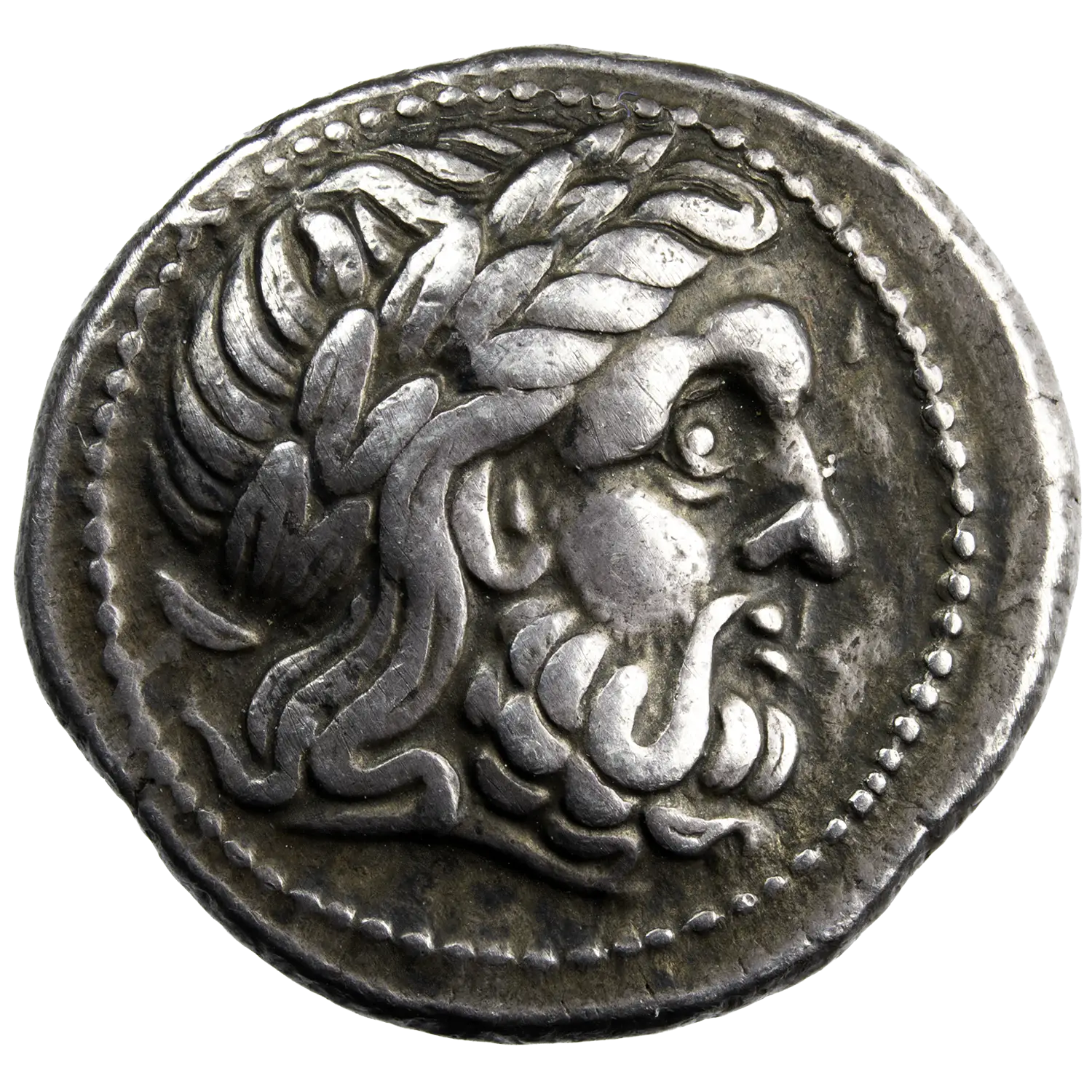
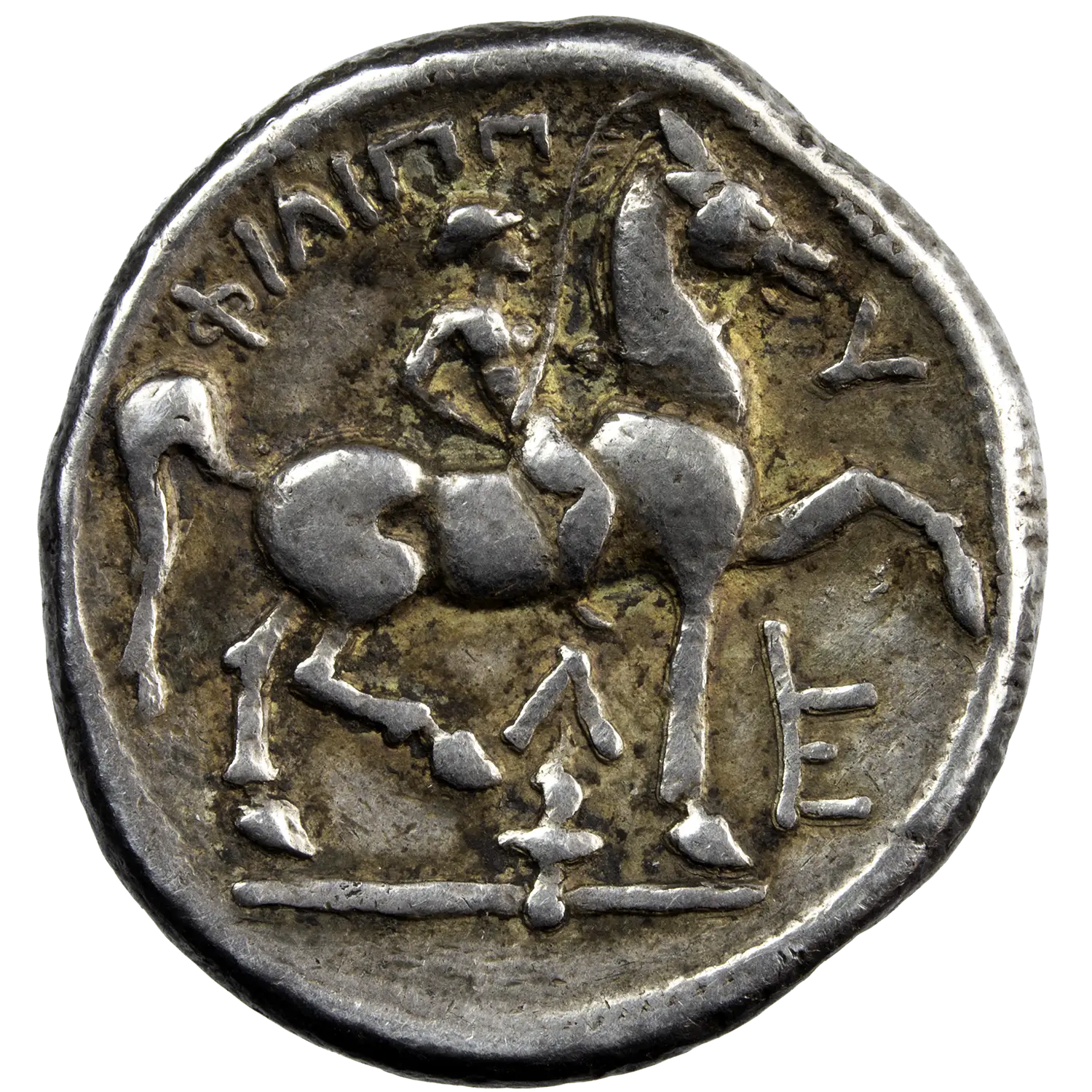
Silver tetradrachm of the Danubian Celts, struck in the 4th–3rd centuries BC, imitating the coinage of Philip II of Macedon. The obverse depicts a laurel-wreathed head of Zeus, rendered in a Celticized style. The reverse shows a nude horseman galloping, with a degenerated legend of ΦΙΛΙΠΠΥ, lacking the Ο. The letter Ε beneath the horse’s foreleg constitutes a rare control mark.
This coin illustrates the appropriation and transformation of Greek models by the Celts of Central Europe.
