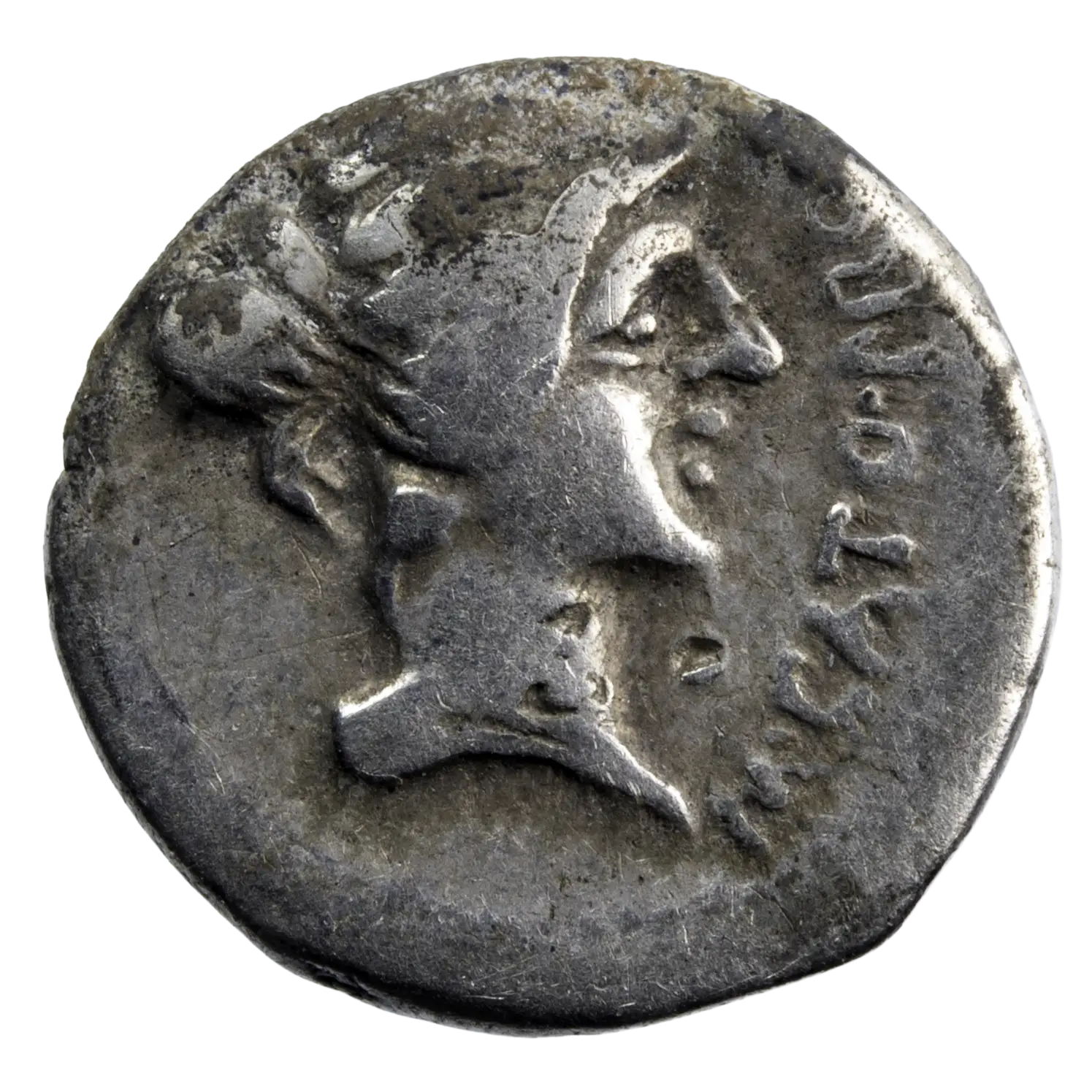
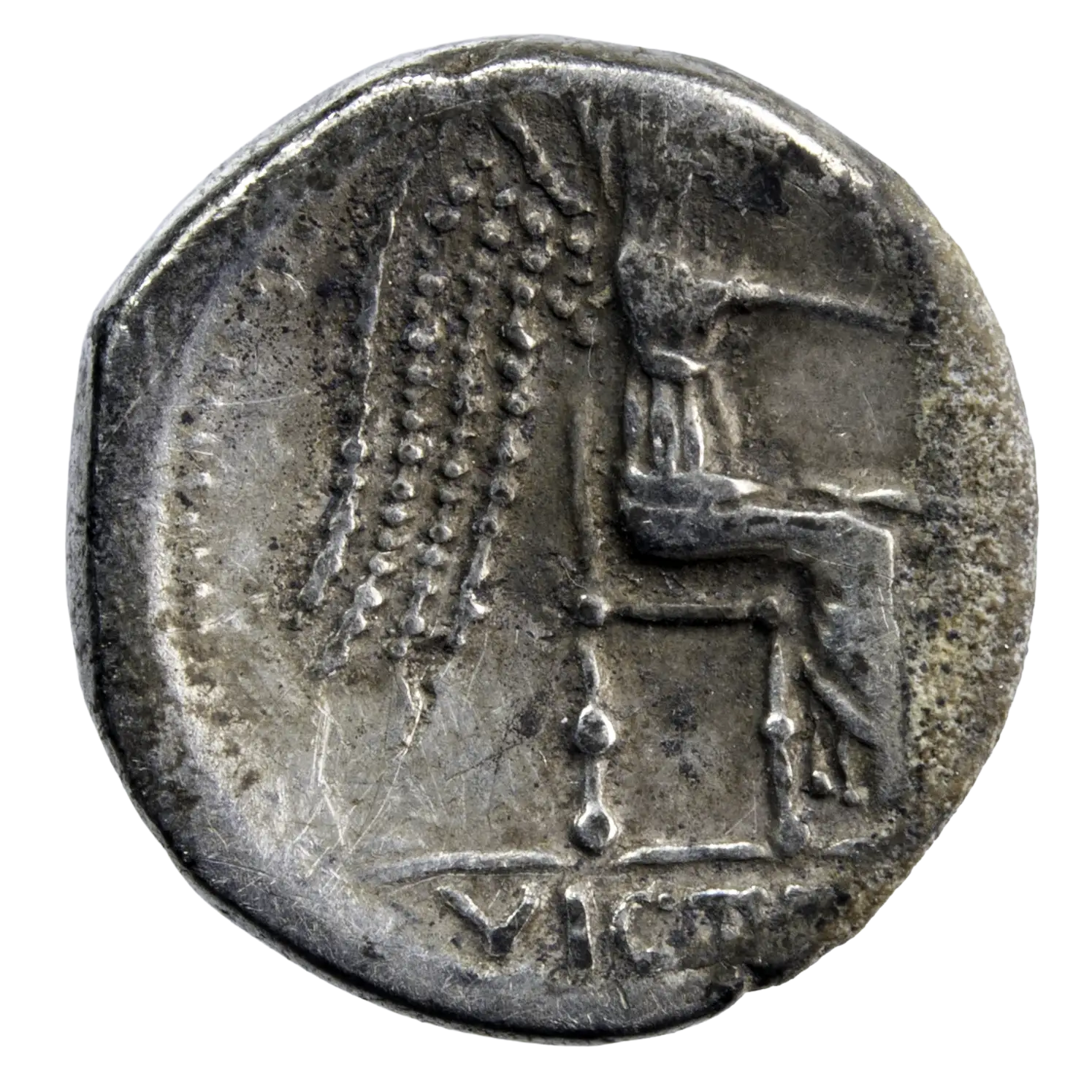
The Denarius of Cato of Utica
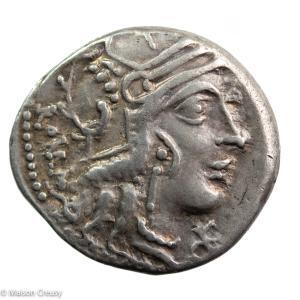
This denarius is one of the most powerful numismatic testimonies from the end of the Roman Republic. It was struck at Utica, in Africa (present-day Tunisia), in a context of civil war, shortly before Julius Caesar’s definitive victory over the last Republicans.
Historical context
After Pompey’s defeat at Pharsalus (48 BC), the supporters of the Republic continued the struggle in Africa. Cato of Utica, an emblematic figure of Stoicism and a fierce defender of republican values, became one of the main leaders of the anti-Caesarian camp. Utica then served as a political and military base.
This denarius was struck to pay the troops and to assert the legitimacy of the republican camp in the face of Caesar, who was concentrating more and more personal power.
Political and ideological significance
This denarius is not merely a circulating coin. It conveys a strong political message:
-
It opposes Caesar’s personal propaganda, as he had his own portrait depicted on coinage.
-
It affirms that power must remain impersonal, founded on law, tradition, and the Republic, rather than on a single man.
-
The choice of traditional symbols reflects Cato’s Stoic vision: moral rigor, civic duty, and refusal to compromise with tyranny.
Broadcast in French“Les grands dossiers de l’histoire” by Franck Ferrand on Cato of Utica: link