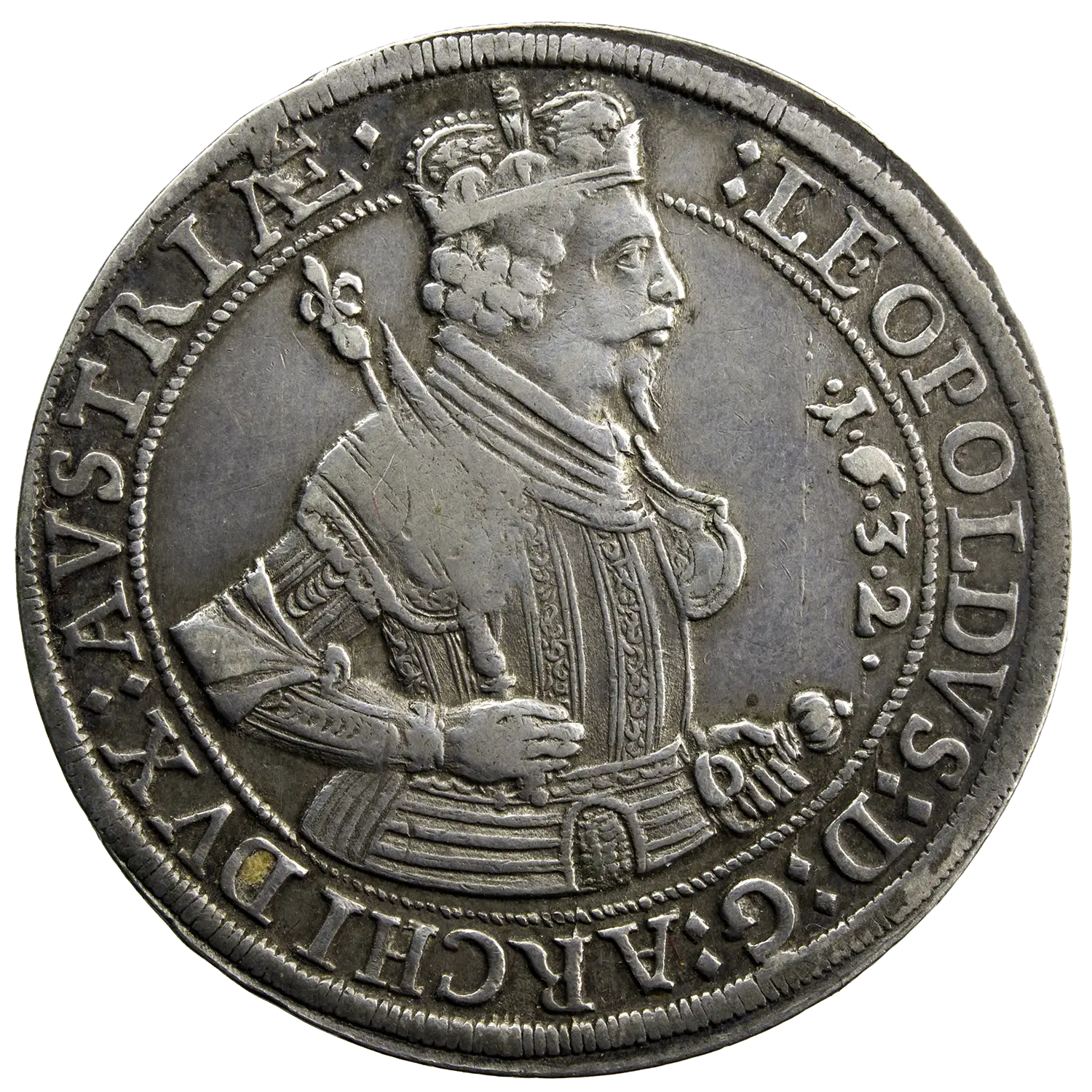
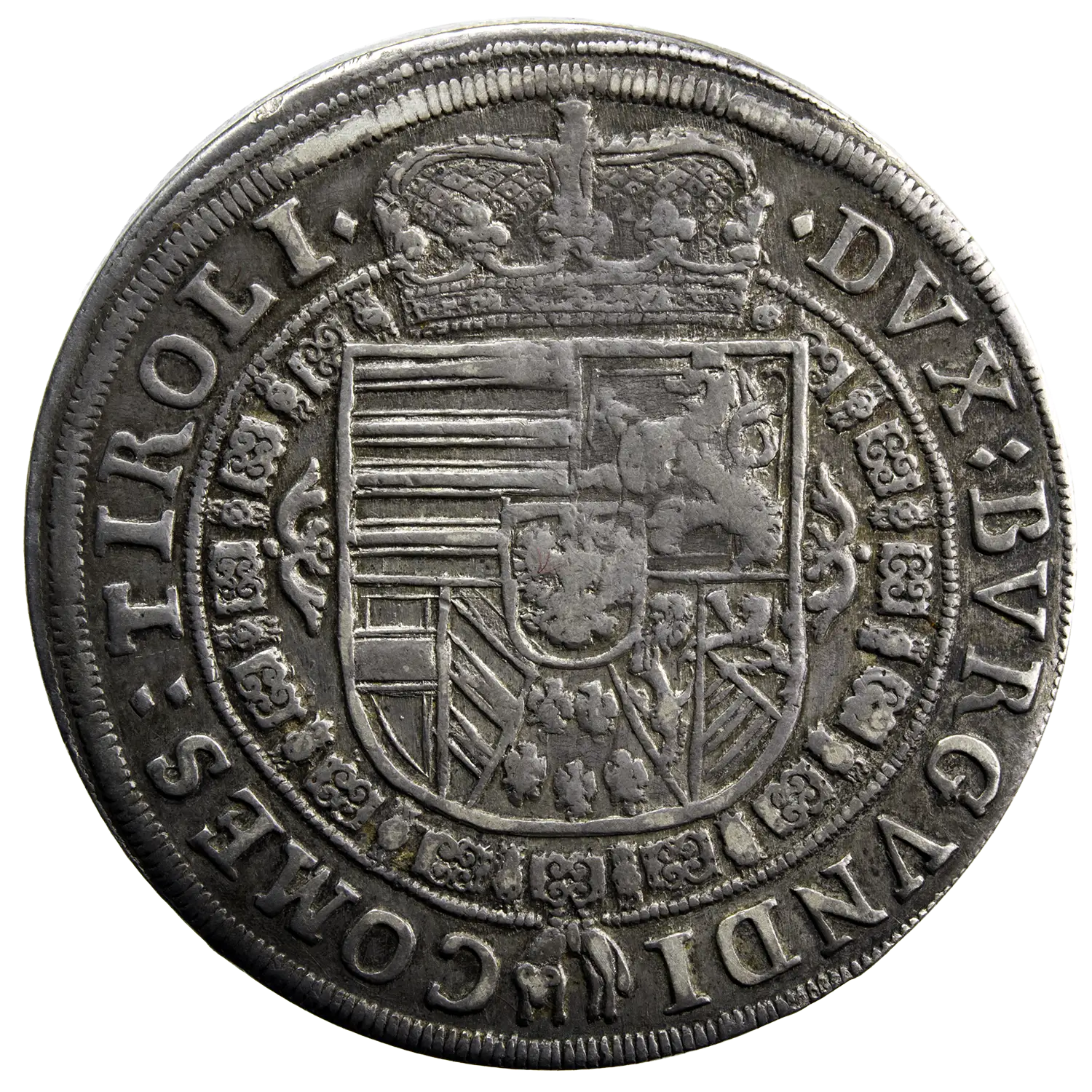
Pedigree: Claitte Collection, lot 581
The minting technique of the thalers of Leopold V (Archduke of Austria and Count of Tyrol), produced at the Hall in Tyrol mint around 1632, represents a major milestone in numismatic history. At that time, the Hall mint was one of the most modern in the world, utilizing a technology that was revolutionary for its era: the roller press (or Walzenprägung in German).
The Roller Press (Walzenprägung)
Unlike traditional hammer striking, where a metal blank was struck between two fixed dies, the roller press used two engraved steel cylinders.
-
The Mechanism: The designs for the obverse (heads) and reverse (tails) were engraved directly onto the surface of two stacked rollers. A silver strip (known as a “zaine” or billet) was passed between these rollers, which were powered by a water wheel (hydraulic energy) or a horse mill.
-
The Imprint: The enormous pressure exerted by the rollers impressed the design onto the silver strip as it passed through.
-
The Cutting: Once the strip was printed, the individual coins were cut out using a blanking punch.
