

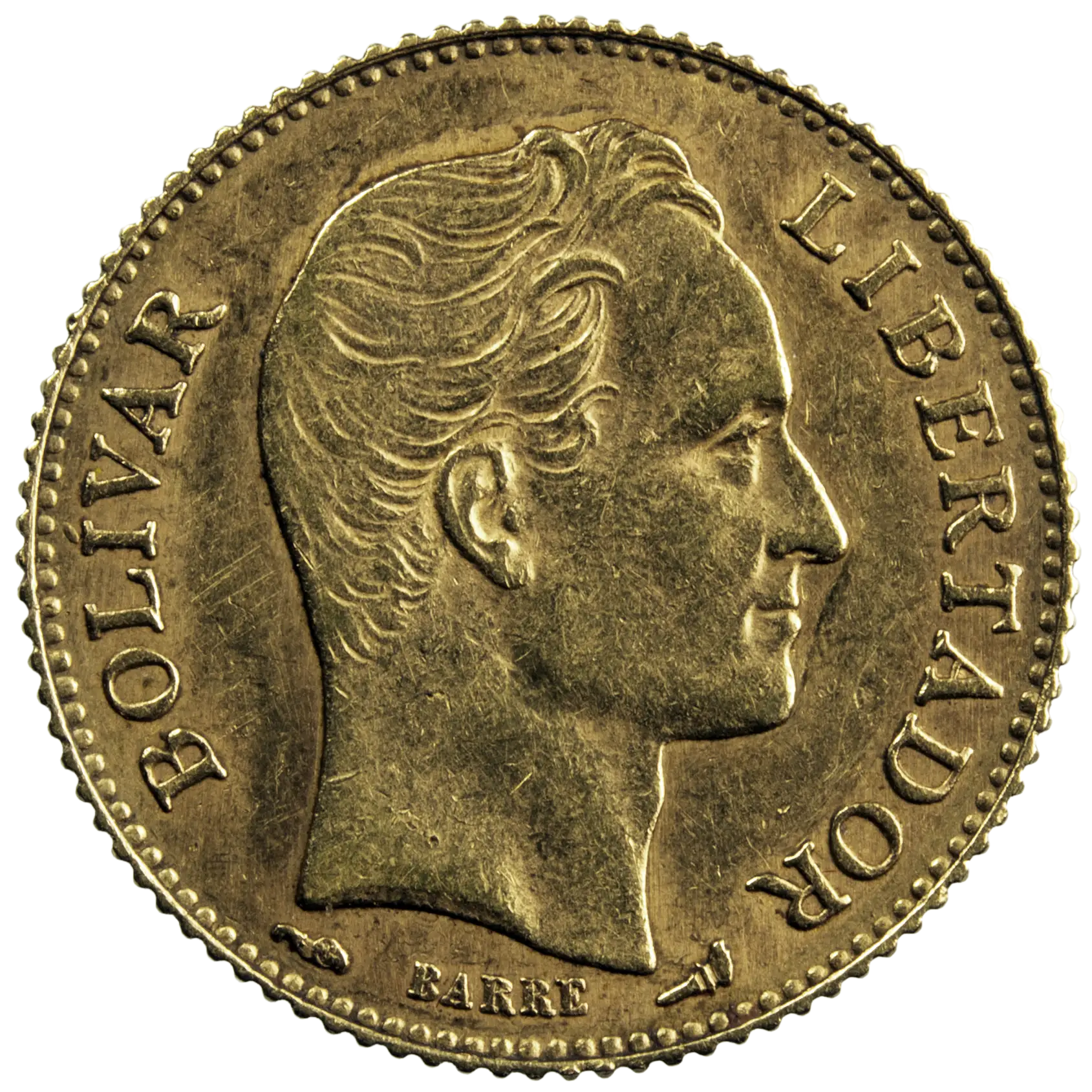
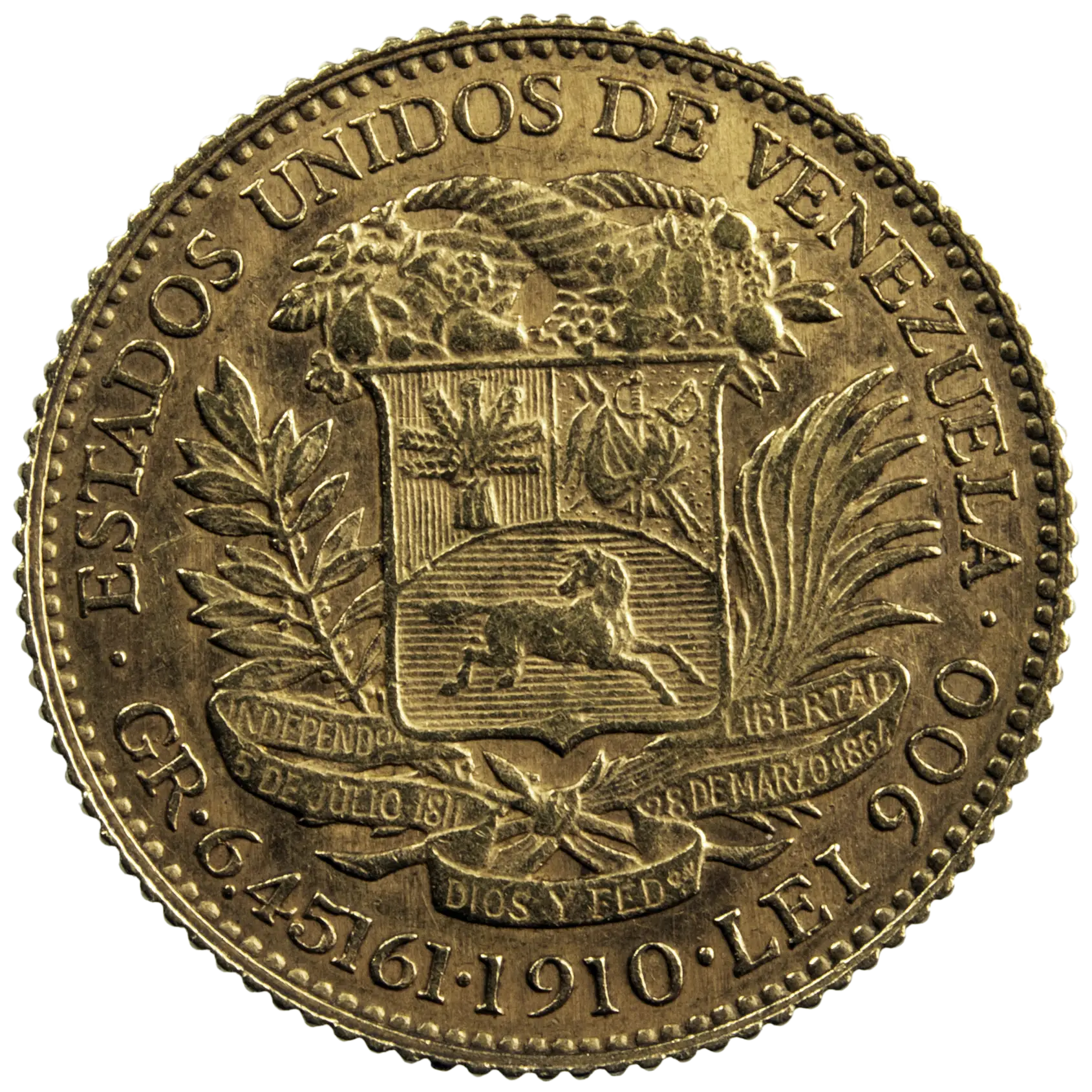
Venezuelan 20 Bolívares gold coin struck in 1910 in Paris with a limited mintage of only 70,000 pieces. This coin was minted following the weight and fineness standards of the Latin Monetary Union.
The Latin Monetary Union: The Dream of a Common Currency Before the Euro
Founded in 1865 at the initiative of Napoleon III's France, the Latin Monetary Union (LMU) was one of the first successful attempts at international monetary unification.
The idea was simple yet ambitious: to allow coins to circulate freely from one country to another. To achieve this, member countries (France, Belgium, Italy, Switzerland, and later Greece) harmonized the weight, diameter, and fineness of their gold and silver coins based on the Germinal Franc model.
Pillars of the Union:
-
Bimetallism: A system based on both gold and silver.
-
Interchangeability: A French 20 Francs coin had the same value and weight as an Italian 20 Lire or a Greek 20 Drachmae coin.
-
Technical Standard: 5, 10, and 20-unit coins were composed of 900/1000 gold.
Venezuela and the Latin Monetary Union: The South American Exception
Although the Union was European by definition, its prestige and stability appealed far beyond the borders of the Old Continent. Venezuela is one of the most striking examples.
In 1879, under the leadership of President Antonio Guzmán Blanco, Venezuela underwent a major monetary reform. He created the Bolívar and decided to align it strictly with the standards of the Latin Monetary Union.
Why this de facto membership?
-
Economic Stability: By adopting the Union's standards, Venezuela facilitated its trade with Europe, its primary partner at the time.
-
Cultural Prestige: During this period, Caracas aspired to be a "Little Paris." Aligning its currency with the Franc was a powerful symbol of modernization.
-
Numismatics: This led to the creation of the famous silver and gold "Bolívares" (notably the 20 and 100 Bolívares), whose technical specifications are strictly identical to the French Napoleons.
Did you know? Although Venezuela respected the standards of the Latin Monetary Union, it was never an "official" member by international treaty. Instead, it was a "de facto associate" country, much like many other nations such as Spain, Serbia, and Colombia.
