

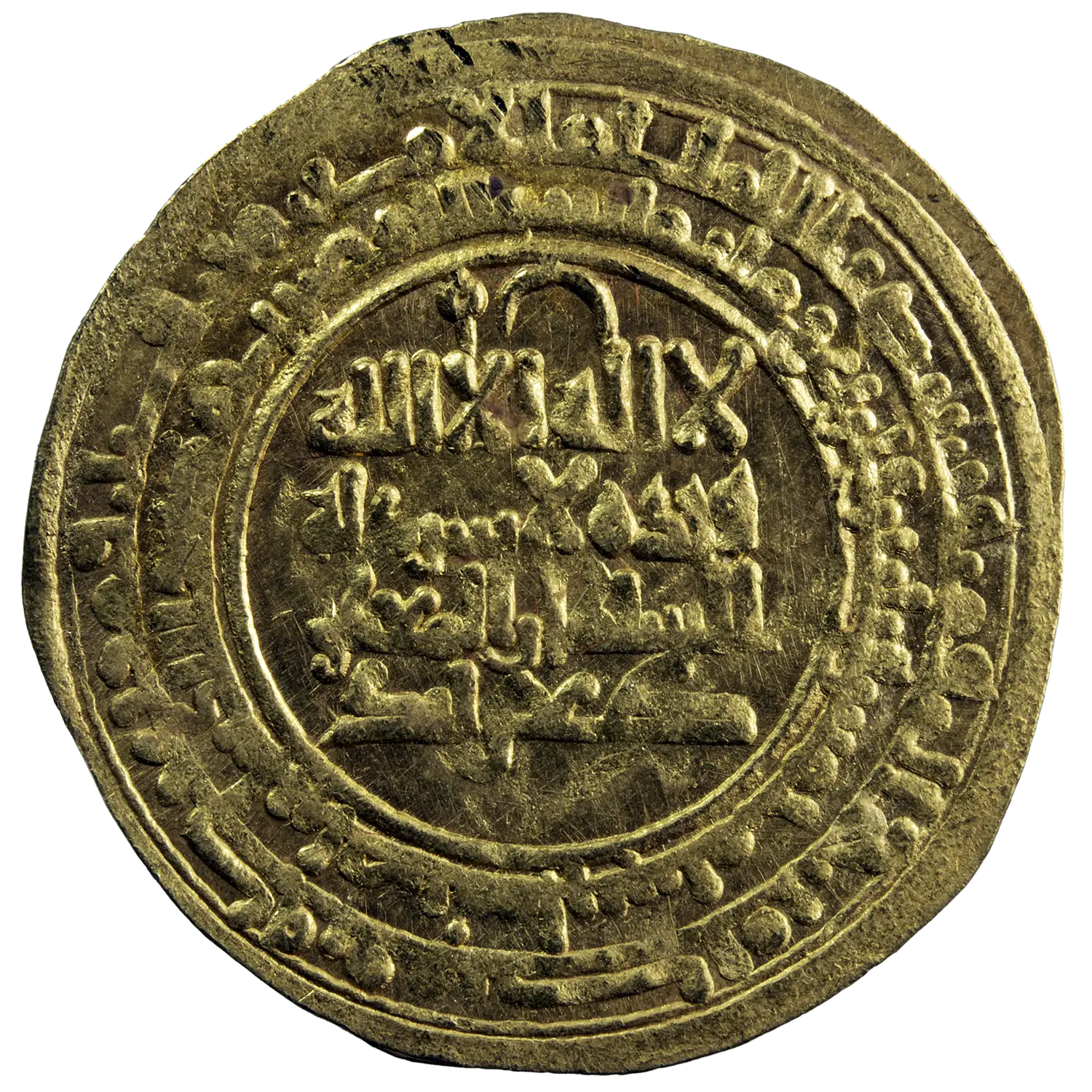
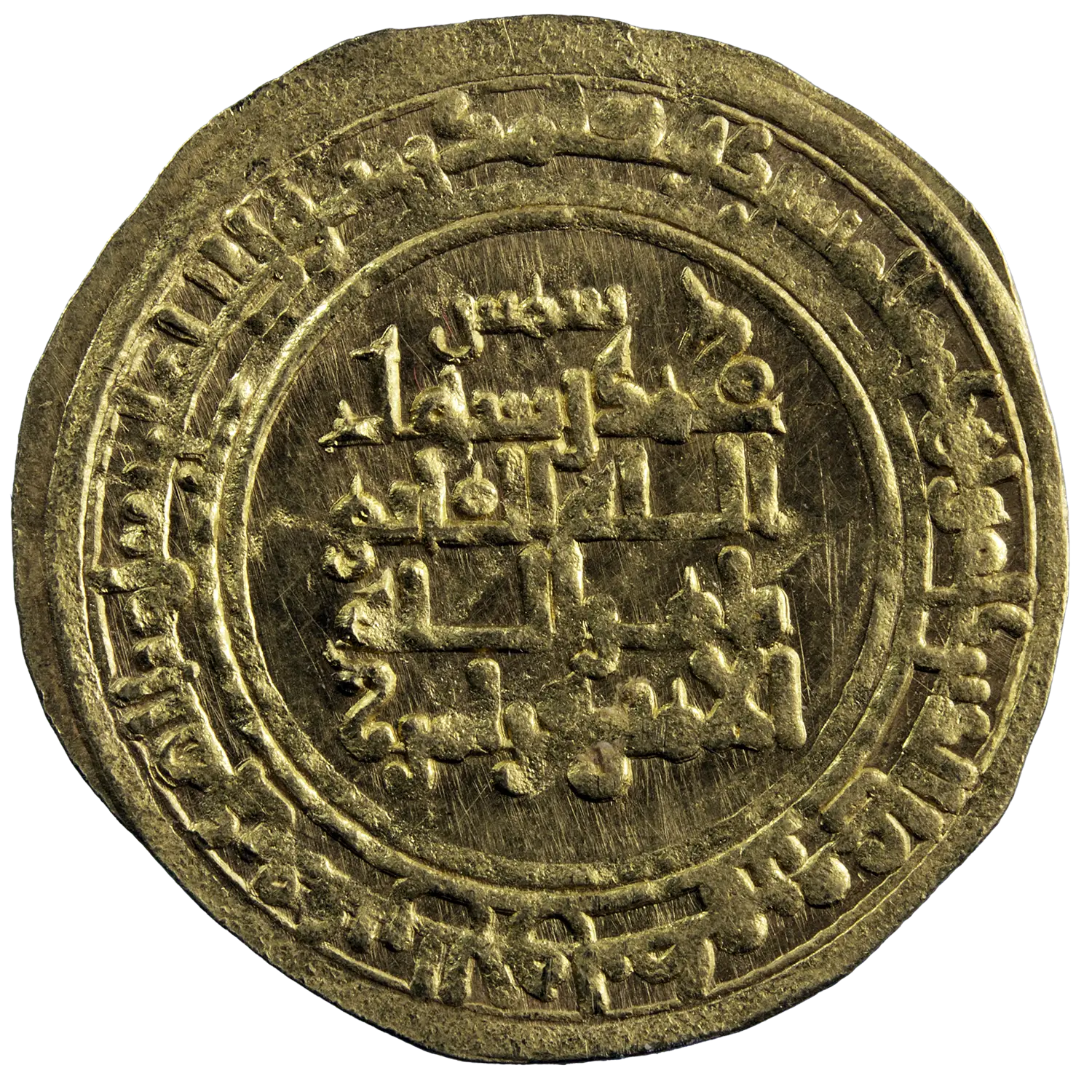
Pre-Mongol Iran, Jibâl. Kakwayhide dynasty.
Gold dinar in the name of Farâmurz, issued in Isfahan in 435 AH, i.e. 1043-1044. The coin cites the Abbasid caliph al-Qâ'im as well as the Seljuk ruler Tughril Beg as suzerain, testifying to the new political situation born of Seljuk expansion into western Iran.
Historical context
The Kakwayhids, a dynasty of Daylamite origin, dominated Isfahan and part of Jibâl in the 11th century, in an Iran still marked by the Byzantine heritage but already disrupted by the arrival of the Seljuks. Farâmurz succeeded his father Muhammad b. Rustam Dushmanziyâr around 1041, just as the Seljuks, following their victory over the Ghaznevids, were becoming the rising power in the region. Numismatic sources show that Farâmurz retained local authority for a time, but under the suzerainty of Tughril Beg, whose name appears on Isfahan dinars. This mention is not a protocol detail: it materialises, on monetary gold, the transformation of kakwayhide power into vassal power.
The vintage AH 435 is therefore particularly interesting: it belongs to the short phase when Isfahan remained associated with Farâmurz while recognising Seljuk authority. The coin illustrates the gradual transition from a fragmented western Iran between local dynasties to an area dominated by the Great Seljuks.
